
NewsDetails
Three-Screw Pump Guide — 3G Series for Lubrication and Fuel Systems
author:Tianyi Pump time:2026-08-01 19:26:39 Click:185
Among positive displacement pumps, the three-screw pump occupies a unique position. It delivers smooth, continuous flow while maintaining a compact envelope and straightforward maintenance. The 3G series has become widely trusted for lubrication circulation, fuel oil transfer, and hydraulic system supply across marine, power generation, and heavy machinery sectors. For anyone specifying industrial fluid handling equipment, understanding the three-screw pump's strengths and limitations is well worth the effort.
How the Three-Screw Pump Works
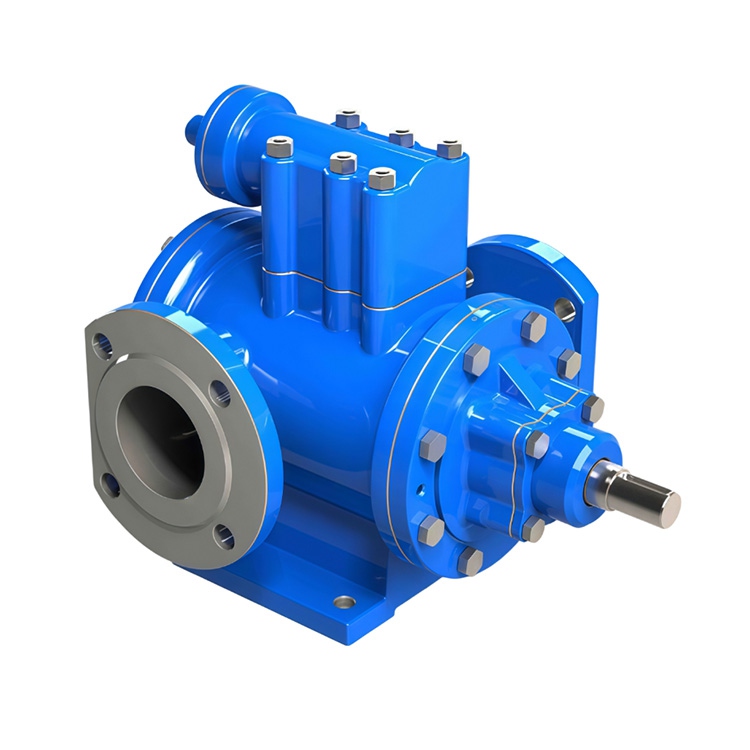
The 3G series uses three intermeshing screw rotors inside a close-fitting casing. The central power rotor is coupled to the motor shaft, while two smaller idler rotors mesh with it along their entire length. As the power rotor turns, the screw threads create sealed cavities that travel axially from suction to discharge. The liquid is moved forward without significant pulsation or turbulence. Because flow is axial rather than radial, the pump produces exceptionally smooth discharge with minimal pressure fluctuation compared with gear pumps of similar capacity. The axial flow principle also means low internal shear forces on the pumped fluid — important for lubricating oils and hydraulic fluids where viscosity must be preserved.
Key Advantages of the 3G Series
Flow stability is the primary advantage. Because screw rotors engage continuously without the intermittent meshing seen in gear pumps, discharge is nearly pulse-free. This is especially important in lubrication systems serving high-speed rotating equipment, where pressure fluctuations can affect oil film thickness and bearing reliability. Noise and vibration levels are also low. The balanced hydraulic design of the three-screw rotor set eliminates radial unbalanced forces inherent in single-screw or gear pumps. In applications near occupied work areas, this quiet operation is a real benefit. Self-priming capability is another strong point — the 3G series draws fluid from a lower level and primes quickly without manual filling, simplifying installation above the fluid reservoir.
Performance Range and Fluid Compatibility
Standard 3G series pumps handle clean lubricating fluids at viscosities typical of industrial oils, hydraulic fluids, fuel oils, and diesel. They operate at pressures up to several megapascals depending on the number of screw stages. Flow rates range up to several hundred liters per minute for larger models. Standard temperature limits are 80-150 °C, with high-temperature variants for hot oil circulation. Because internal clearances between rotors and casing are tight, the pump requires clean fluid without solid particles or fibrous materials. A suction strainer or inline filter is strongly recommended.
Marine and Power Generation Applications
Marine engineering is one of the largest application areas for three-screw pumps. On ships, the 3G series is common for main engine lubrication oil circulation, fuel oil transfer, and hydraulic system feed. The compact axial design fits tight engine room spaces, and low vibration protects nearby instrumentation. In power plants, three-screw pumps serve turbine lubrication systems where reliable oil circulation is critical for bearing cooling. They are also used for fuel forwarding in diesel generator sets and oil recirculation in transformer cooling circuits. The ability to run continuously with minimal maintenance aligns well with base-load power generation demands.
Selecting the Right Screw Pump
When sourcing from a screw pump manufacturer, several factors need review. Fluid viscosity at operating temperature is primary — it directly affects internal slip and volumetric efficiency. Higher-viscosity fluids reduce internal leakage and improve efficiency. Speed selection is another critical decision. Three-screw pumps are often driven directly by electric motors, but can also use gearboxes or variable frequency drives for reduced-speed operation. Lower speeds reduce wear and extend seal life. The choice between mechanical seals and packing seals depends on fluid temperature, pressure, and leakage tolerance. Mechanical seals suit high-temperature or high-pressure services, while packing may be adequate for lower-pressure circuits.
Installation and Maintenance
One additional advantage of the three-screw pump in continuous service is its tolerance for pressure variations at the discharge side. Because the screw rotors do not create the intermittent pressure pulses associated with gear pumps, downstream filters and heat exchangers experience less mechanical stress, contributing to longer component life across the entire system.
Proper installation begins with correct shaft alignment with the drive motor — misalignment is a common cause of premature bearing and seal failure. Flexible couplings accommodate minor misalignment, but initial alignment must be within the coupling manufacturer's tolerances. Suction piping must be sized to prevent cavitation, and strainer mesh must protect the pump without excessive pressure drop. Regular oil analysis of the pumped fluid can provide early warning of internal wear. Bearing temperature monitoring is recommended for critical-duty pumps. With proper installation and routine inspection, a 3G series screw pump delivers many years of reliable continuous service.
References
Karassik, I. J., Messina, J. P., Cooper, P., & Heald, C. C. (2001). Pump Handbook (4th ed.). McGraw-Hill.
Nesbitt, B. (2006). Handbook of Pumps and Pumping. Elsevier.
Bloch, H. P. (2011). Pump Wisdom: Problem Solving for Operators and Specialists. Wiley.
Hydraulic Institute. (2020). Hydraulic Institute Standards for Rotodynamic and Positive Displacement Pumps. HI.
Brennen, C. E. (1994). Hydrodynamics of Pumps. Cambridge University Press.
 Recommended Products
 Contact us
—— Contact:Mr. Shi
—— Tel:+86 15612730683
—— Email:btclyb@163.com
—— Url:https://www.tianyi-pump.com
—— Address:260 meters east of Xiaoquan Village Committee, Bozhen, Botou City, Cangzhou City, Hebei Province