
NewsDetails
Structural Design of Mechanical Seals for High-Viscosity Media Pumps
author:Tianyi Pump time:2026-06-24 14:51:31 Click:92
Structural Design of Mechanical Seals for High-Viscosity Media Pumps
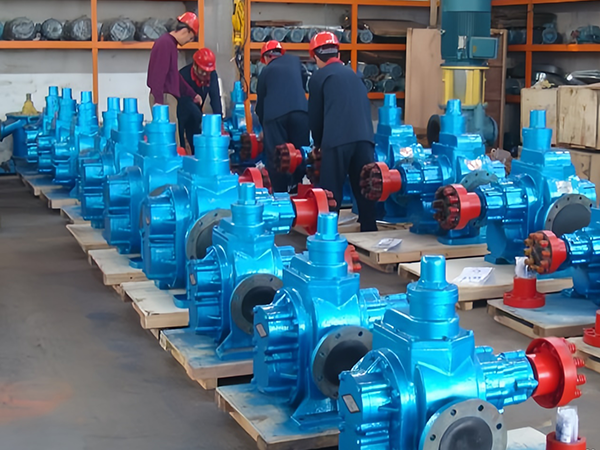
Mechanical seals used in high-viscosity pumps such as Circular Arc Gear Pumps are critical components that ensure leak-free operation under demanding conditions. High-viscosity media—such as resins, heavy oils, asphalt, syrups, and chemical pastes—create unique sealing challenges due to poor fluidity, high friction resistance, temperature sensitivity, and a tendency to solidify or crystallize. A properly designed mechanical seal must balance lubrication, heat dissipation, wear resistance, and anti-clogging capability.
Key Challenges in High-Viscosity Sealing Conditions
High-viscosity media significantly affect seal performance compared to low-viscosity fluids.
The main difficulty lies in insufficient lubrication at the seal faces and increased frictional heat generation during operation. Thick fluids cannot easily penetrate the sealing interface, leading to dry friction, rapid wear, and thermal deformation.
In addition, pressure fluctuations and intermittent flow conditions further destabilize the sealing environment.
Seal Face Structure Design
Seal face design is the core of mechanical sealing performance.
For high-viscosity applications, wider sealing faces are often used to distribute contact stress and improve stability. However, excessive width must be avoided to prevent heat accumulation.
Materials such as silicon carbide (SiC), tungsten carbide (WC), and carbon graphite are commonly selected due to their wear resistance and thermal stability.
A well-optimized seal face structure must maintain stable micro-lubrication while minimizing frictional heat buildup.
Spring and Compensation Mechanism Design
The spring system ensures continuous contact between seal faces under varying pressure and temperature conditions.
Single-spring, multi-spring, or wave-spring configurations may be used depending on operating requirements. Multi-spring designs provide more uniform force distribution and better stability under vibration.
In high-viscosity media, the compensation system must also accommodate axial movement caused by thermal expansion and pressure variation.
Anti-Clogging and Anti-Crystallization Design
One of the most important considerations in high-viscosity sealing systems is preventing material accumulation.
Seal cavities should be designed with smooth flow paths and minimal dead zones to prevent media stagnation and solidification.
Flush ports, barrier fluid systems, or quench arrangements are often used to keep the sealing area clean and thermally stable.
Cooling and Lubrication Support Systems
Because high-viscosity fluids often generate significant heat at the seal interface, auxiliary cooling is frequently required.
Plan 52, Plan 53, or external flushing systems can introduce clean lubricating fluid into the sealing chamber. This improves lubrication conditions and removes excess heat.
Proper cooling prevents carbonization, hardening, and premature seal face failure.
Pressure Balance Design
High-viscosity pumps often operate under fluctuating discharge pressures.
Balanced mechanical seal designs reduce the axial load acting on seal faces. This helps stabilize sealing performance and reduces wear.
Pressure-balanced structures are especially important in high-pressure or variable-load systems.
Material Selection for Seal Components
Material compatibility with chemical properties and temperature conditions is essential.
Common combinations include SiC/SiC for abrasive and high-temperature conditions, and SiC/Carbon for general high-viscosity applications. Elastomer components such as FKM, EPDM, or PTFE-based materials are selected based on chemical resistance requirements.
Metal components are typically made from stainless steel (304 or 316L) for corrosion resistance.
Installation and Assembly Considerations
Proper installation is critical to ensure seal reliability.
Misalignment, improper compression, or contamination during assembly can significantly reduce seal life. Clean installation conditions and precise alignment are essential.
Even minor assembly errors can lead to immediate leakage or rapid seal failure under high-viscosity conditions.
Failure Prevention Strategies
Common failure modes include dry running, overheating, crystallization blockage, and face wear.
These can be mitigated through proper flushing design, temperature control, pressure stabilization, and correct material selection. Regular inspection and monitoring of leakage and temperature trends further improve reliability.
Conclusion
Mechanical seal design for high-viscosity media pumps requires careful integration of structural geometry, material selection, lubrication strategy, cooling systems, and pressure balancing. By optimizing these elements, seals can achieve stable operation under demanding conditions involving resins, oils, asphalt, and chemical pastes. A well-designed sealing system is essential for ensuring long-term reliability, reducing maintenance frequency, and maintaining safe operation in high-viscosity pumping applications.
References
API 682 Mechanical Seal Standard for Pumps
Hydraulic Institute Standards for Rotary Pumps
Pump Handbook, Fourth Edition, McGraw-Hill Education
Principles of Mechanical Seal Design and Application
Industrial Sealing Technology and Reliability Engineering Manual
 Recommended Products
 Contact us
—— Contact:Mr. Shi
—— Tel:+86 15612730683
—— Email:btclyb@163.com
—— Url:https://www.tianyi-pump.com
—— Address:260 meters east of Xiaoquan Village Committee, Bozhen, Botou City, Cangzhou City, Hebei Province